


-1.png?width=3641&height=660&name=abcshedstransparent2%20(1)-1.png "ABC Sheds")
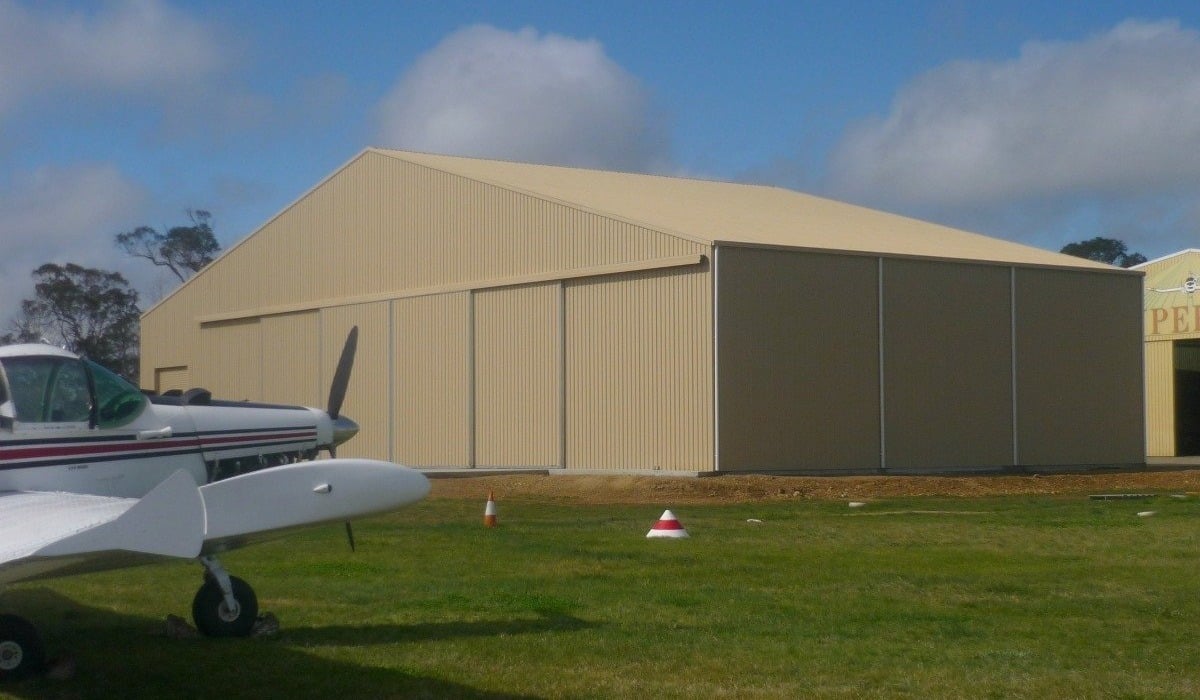
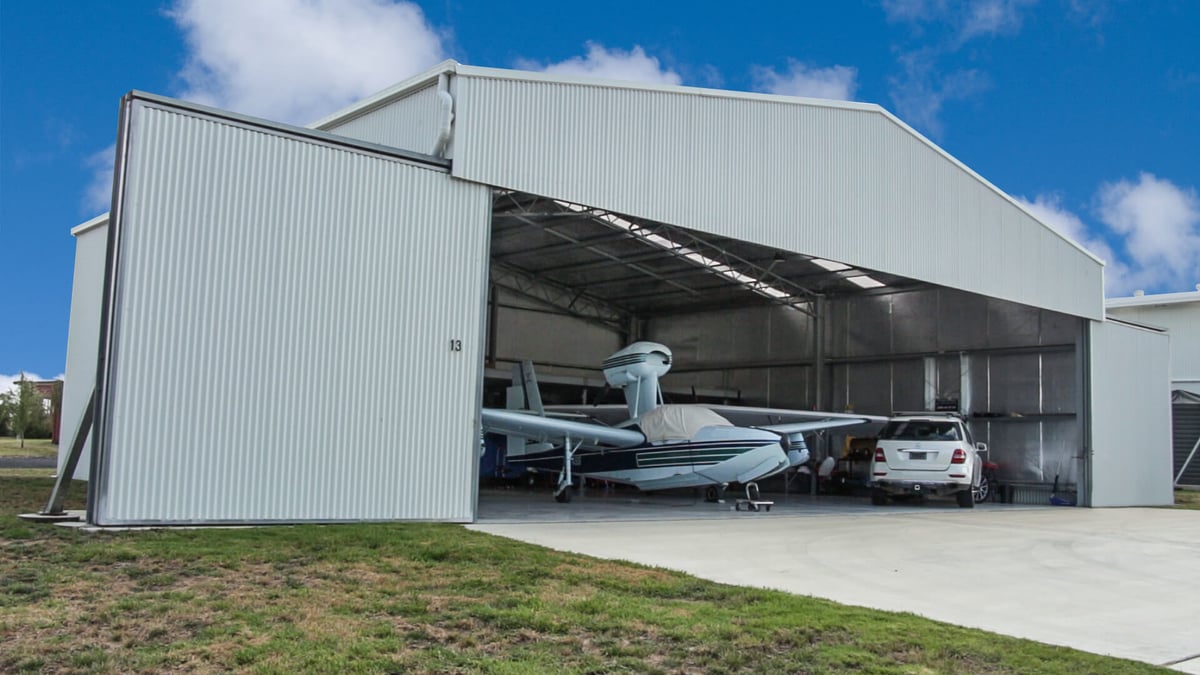
So you’ve decided to build an aircraft hangar – great stuff! If you’re choosing to build an aircraft hangar to house your collection of small planes, or perhaps you’ve added an airstrip, and need a basic hangar for small planes that may come and go?
Whatever the reason, a steel frame aircraft hangar is something that will do the trick! An aircraft hangar is a great way to keep your planes protected from the elements when they aren’t in use (plus we think they look pretty cool too)!
Before you make the final call, it is worth understanding the key aircraft hangar requirements that can affect your design, approvals and budget.
In this article, we walk through five important things to think about so you can move ahead with confidence and put together aircraft hangar building plans that suit how you actually fly and work.
1. Location
The location of your aircraft hangar is the first thing that needs to be considered. Depending on your location in Australia, there could be different local, state or federal aviation planning requirements that apply.
A company experienced in manufacturing aircraft hangars, like ABC Sheds, will already be familiar with the relevant design standards and will also be able to take into account other requirements based on where you are located, such as wind ratings, terrain categories and more.

Understanding local requirements in Australia
Your site will need to satisfy a mix of aviation and building rules. These can include:
- Local council planning rules and zoning
- Airport or airfield operator requirements for hangar locations and clearances
- Australian building codes for structural design, fire safety and accessibility
- Any environmental constraints, such as flood or bushfire overlays
While there are international documents on aircraft hangar design and fire protection that engineers sometimes refer to, your project in Australia still needs to comply first and foremost with the National Construction Code (NCC), relevant Australian Standards, local council rules and any requirements from the airport or airfield operator.
Working with experienced engineers and certifiers means these aircraft hangar design standards are considered from day one rather than becoming a surprise late in the approval process.
For more complex commercial or maintenance operations, you may also need to consider Civil Aviation Safety Authority (CASA) requirements for Approved Maintenance Organisations (Part 145) if your hangar forms part of an approved maintenance facility.
Site conditions, access and orientation
Once you know a hangar is allowed on your site, the next step is understanding how it will sit on the land:
- How will aircraft taxi to and from the runway or strip
- Will you need a sealed or gravel apron, and how large
- Is there enough room for service vehicles, fuel trucks and deliveries
- How will prevailing winds and sun affect aircraft movements and door positions
Good orientation can make daily operations easier. For example, placing doors so you are not constantly facing the afternoon sun when moving aircraft in and out, or allowing for a clear taxi path so you are not turning tightly with the wings close to obstacles.
2. What you will use the hangar for
While this may seem obvious, many people end up using their hangars for more than simply storing an aircraft. If you are in a remote area, you might choose to add a living space so that if you need to stay overnight, you have somewhere comfortable to sleep.
By adding mezzanine floors or a balcony, you can increase the functionality so that it becomes a space you can live in for short stays.
If you are handy on the tools, you may plan to do maintenance work on your aircraft. In that case, you will need extra space for a workshop, storage of tools and parts, and clear areas to work around the aircraft.
Or perhaps you are a flying instructor and will use the hangar to give lessons. Then you will want a quiet area for theory sessions and briefings, as well as the main hangar space.
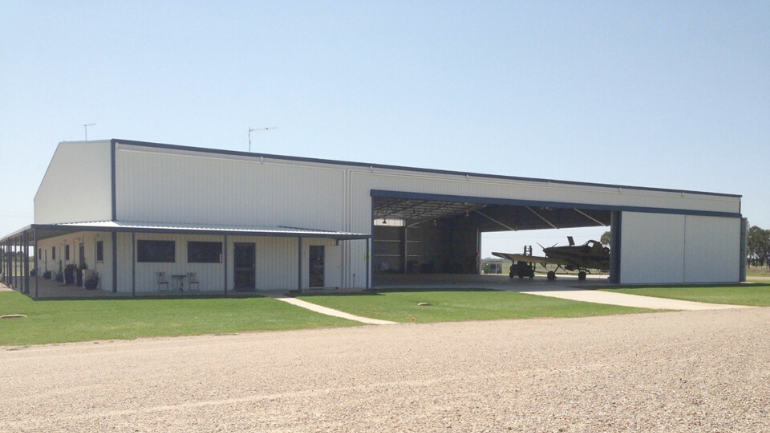
This aircraft hangar features an office space to the side.
Planning for a hangar office and amenities
It is common to include an office that sits alongside or within the main structure.
A dedicated office can be used for:
- Flight planning, paperwork and logbooks
- Briefing students or charter passengers
- Secure storage for radios, headsets and avionics spares
You may also decide to add a small kitchenette, bathroom and shower so you are not constantly walking back to another building.
Thinking about these spaces early helps your designer plan doorways, windows and services so the office feels integrated rather than an afterthought.
Living or short-stay spaces in a hangar
In some remote locations, owners like the idea of a small living area within the hangar. This might be a simple bunk room or a more comfortable mezzanine space.
Whether you can live in an airplane hangar full-time depends on local zoning rules and building classifications, so you will need to check this carefully with your council and building certifier.
Even if permanent living is not allowed, designing a comfortable short stay area can make life easier if weather delays your departure or you are doing extended maintenance work.
Allowing for maintenance, painting and specialist uses
If you expect to do more than basic cleaning and inspections, it is important to think through specialist activities as part of your requirements:
- A clear bay with good access if you need to remove engines or major components
- Separate storage for fuels, oils and chemicals
- A well-ventilated area if you plan to spray paint or touch up finishes
Dedicated paint hangar requirements will usually include stronger ventilation, overspray control and more stringent fire protection.
Even if you are not building a full paint hangar, it is wise to discuss any maintenance and painting you plan to do so that the design can allow for safe ventilation and storage from the start.
3. Design
With advances in design technology and versatile materials like steel, we can now design almost any type and style of aircraft hangar you require.
While your hangar can be custom-built to your requirements, it is important to consider early on any specific design elements you want to include.
It is worth thinking about things like:
- How many aircraft will you store in the hangar
- The size and type of the aircraft you will store
- The types of doors you require, sliding or rolling
- Clear door openings that comfortably allow for wing span and tail height
- Structural clearances for doors, cranes and any future equipment
- Floor loads for aircraft, vehicles and workshop equipment
- Clear lines of sight so you can safely manoeuvre aircraft without tight turns
Once you work through these questions, you will be in a much better position to brief a shed manufacturer like us so we can provide something that meets your requirements now and into the future.
Detailing your aircraft hangar building plans
Once the big decisions are made, your building plans can capture all the details that make day-to-day use easier:
- Power points, data outlets and compressed air drops
- Locations for benches, racks and storage rooms
- Door swings and roller door controls
- Safe routes for fuel and service lines
Getting these items onto the drawings early means they are coordinated with the structure, rather than cutting and drilling into steel or concrete after the hangar is built.
4. Interior organisation
Once you have worked out the design of your hangar and can picture what the exterior will look like, it is time to think about how you will organise the interior and by that, we mean how you will store your aircraft.
There are several different formations you can use when storing aircraft and most of the time, it comes down to how many you want to store.
Once you know how much space you have to work with you can decide which floor plan will be most suitable.
Will you store your aircraft side by side or back to back, or will you use a T hangar formation?
To make the most of the space you have, we recommend a T formation can give you a bit of extra room to play with.
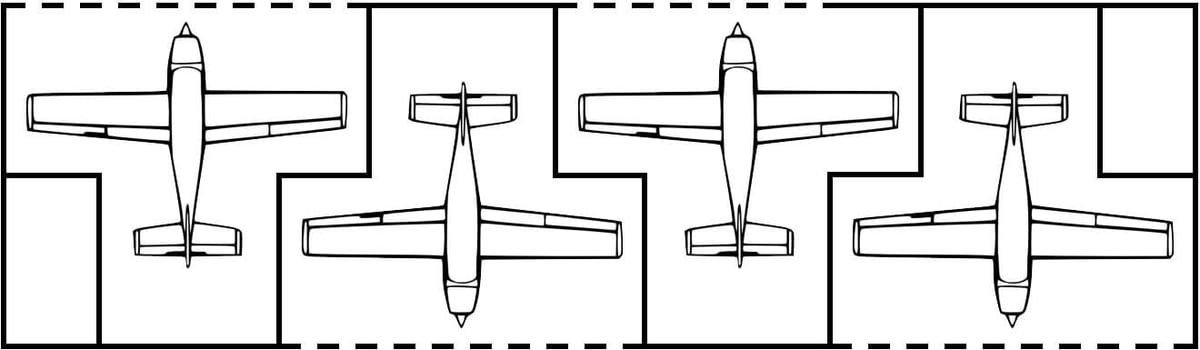
A T hangar formation is a good way to make the most of the space you have available.
Side by side, back to back or T hangar layouts
A T hangar is a layout where the aircraft is parked in a space that is shaped roughly like the letter T.
The wings sit in the wider section while the tail extends into a recess. This allows multiple T hangars to sit side by side, making efficient use of space while still giving each aircraft its own bay.
Whether you use a common open floor with painted markings or divide the structure into several T hangars will depend on how many aircraft you have, how often they move and how much privacy or security each owner needs.
Zoning storage, workshop and hangar office areas
Inside the hangar, it helps to create clear zones:
- Aircraft parking and movement
- Workshop and maintenance area
- Parts and tyre storage
- Hangar office and admin areas
Separating clean aircraft parking from dirtier workshop zones makes it easier to control dust and keep the main floor tidy.
Simple things like positioning the hangar office where you can see the main floor, or placing parts storage close to the workshop, will make the building more enjoyable to use every day.
Lighting, power and ventilation inside the hangar
Safe interior conditions are a big part of aircraft hangar requirements. Your design should take into account:
- Aircraft hangar lighting standards for general work, detailed inspections and emergency lighting
- Natural light through translucent sheeting balanced with glare control
- Aircraft hangar ventilation requirements for exhaust fumes, fuel vapours and any painting or chemical use
In practice, this can mean a mix of high bay LED lighting, task lighting over benches and good cross ventilation through louvres, ridge vents or mechanical fans.
Planning these systems early ensures they integrate neatly with the structural frame and cladding rather than becoming cluttered add-ons later.
5. Construction
How your shed is constructed may be the biggest factor to consider for your aircraft hangar.
This is where all of the planning around span, layout and use is translated into a structure that can safely protect your aircraft for the long term.
A well-built aircraft hangar is more than just a big shed. It needs to be engineered for local wind conditions, suited to your site and designed to handle the loads from aircraft, vehicles and any equipment you plan to use inside.
Getting the construction right from the start will reduce maintenance over the life of the building and make it easier to upgrade or extend in future.
Structural strength, durability and future upgrades
Aircraft are valuable assets, and the building that protects them should be designed with a long life in mind. That means:
- Engineered steel frames sized for local wind, snow and seismic loads
- Cladding and fixings suited to coastal or inland conditions
- Allowing for future additions, such as extra bays or crane rails
At ABC Sheds, we focus on durable, wide-span steel structures that can take these loads and still offer flexibility for future upgrades.
Fire safety and aircraft hangar fire suppression requirements
Fire safety is a major part of aircraft hangar design. Large open volumes, fuel, oils and electrical systems all contribute to risk. For larger hangars, fire safety is usually designed in line with the National Construction Code and relevant Australian Standards, with input from a fire engineer.
On more complex projects, the design team might also look at international guidance documents on aircraft hangars, but those sit alongside, not instead of, Australian regulatory requirements.
Your own aircraft hangar fire suppression requirements will depend on:
- The size and classification of the hangar
- Whether you store fuel inside
- Whether you carry out maintenance or painting
- Local fire authority and building code requirements
For smaller private hangars, suitable extinguishers, alarms and good separation from fuel storage may be enough.
Larger commercial or maintenance facilities may require sprinkler systems, foam or other specialist systems designed by a fire engineer.
Your designer and certifier will guide you on what is required for your project.
Aircraft hangar construction cost and budgeting
It is natural to ask what an aircraft hangar will cost to build. Aircraft hangar construction cost in Australia is influenced by many factors, including:
- Size of the hangar and clear span required
- Door type and opening width
- Wind rating and site conditions
- Slab thickness and apron requirements
- Fit out items such as a hangar office, workshop and amenities
On top of the building itself, you may also need to allow for site works, services, access roads and, if you are on an established airfield, any fees for connecting to existing taxiways and services.
Because of these variables, the best way to understand how much it will cost to buy an airplane hangar that suits your needs is to talk to a specialist team like ABC Sheds for a tailored quote.
As you can see, there are a few things to consider when building an aircraft hangar. So you can get the aircraft hangar that’s perfect for your requirements, it's best to consult the experts – that’s where we come in!
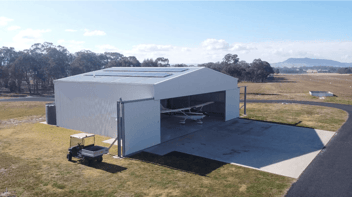
At ABC Sheds, we offer custom-made aircraft hangars for the secure storage of large and small aircraft. Whether you’re running a plane or helicopter charter service or in need of extra space to stow your private jet or microlight, our hangars are the solution for you!
Our engineers have over 20 years of knowledge and experience when it comes to aircraft hangar design and construction. We use the latest methods in hangar construction to provide you with superior and safe storage options. We also offer an ABC Sheds 25-year “you’re covered” guarantee on every product giving you peace of mind. View some of the aircraft hangars we’ve built in our free brochure. Or, use our free Shed Builder tool to design your ideal hangar.

.png?width=352&name=abc_sheds_blog_feature_own_or_lease_aircraft_hangar%20(1).png)
.svg)