


-1.png?width=3641&height=660&name=abcshedstransparent2%20(1)-1.png "ABC Sheds")
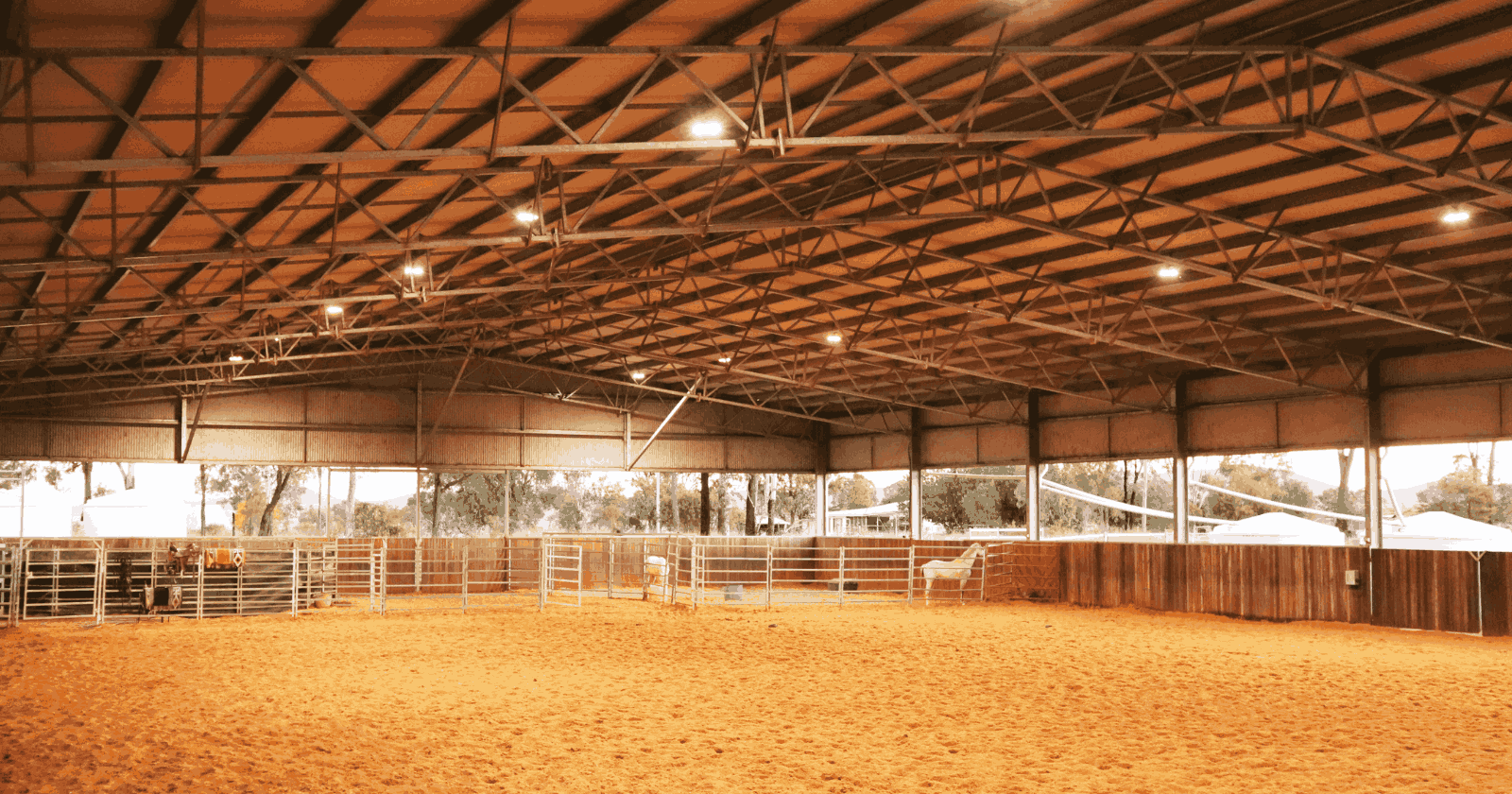
Getting your horse arena dimensions right matters more than most first-time builders realise. A dressage arena that's slightly undersized won't meet competition standards, whilst an oversized recreational space costs thousands more in materials and maintenance you'll never use.
We're updating our old arena sizing guide for 2026 with fresh budget data, construction tips from Equestrian Australia, and practical considerations for Australian properties. Here's what you need to know before breaking ground.
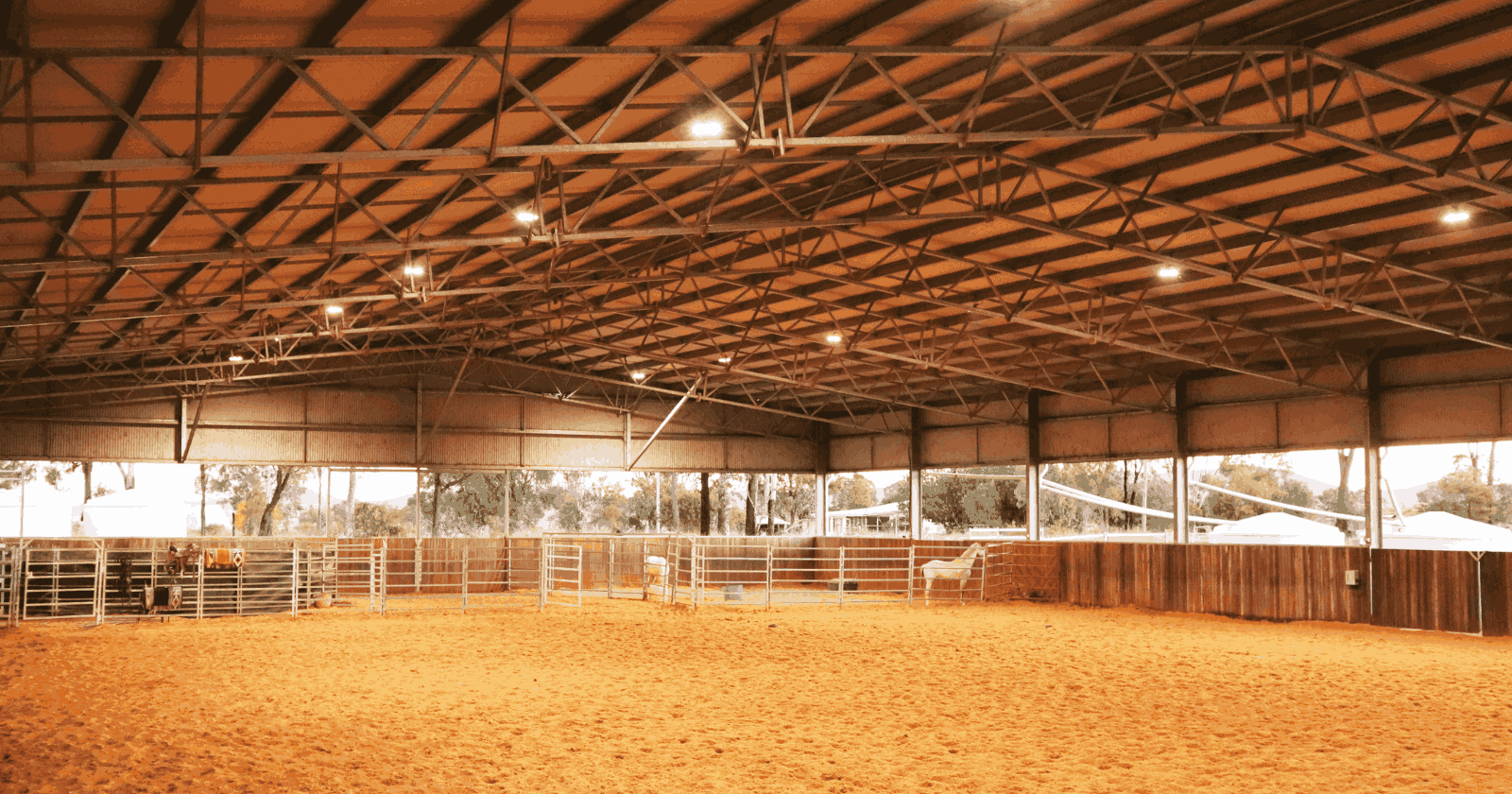
Standard Horse Arena Dimensions by Discipline
Dressage arena dimensions follow strict competition standards, but recreational riders have more flexibility. This is what works for different riding styles:
Small Dressage Arena
20m × 40m is the standard for lower-level tests and everyday schooling. This compact size suits most backyard setups and gives you enough space for basic movements without excessive ground preparation costs.
Full Dressage Arena
20m × 60m accommodates medium to advanced tests and provides generous room for extended gaits. If you're serious about competing or training multiple horses, this size lets you ride full tests at home.
Showjumping Arena
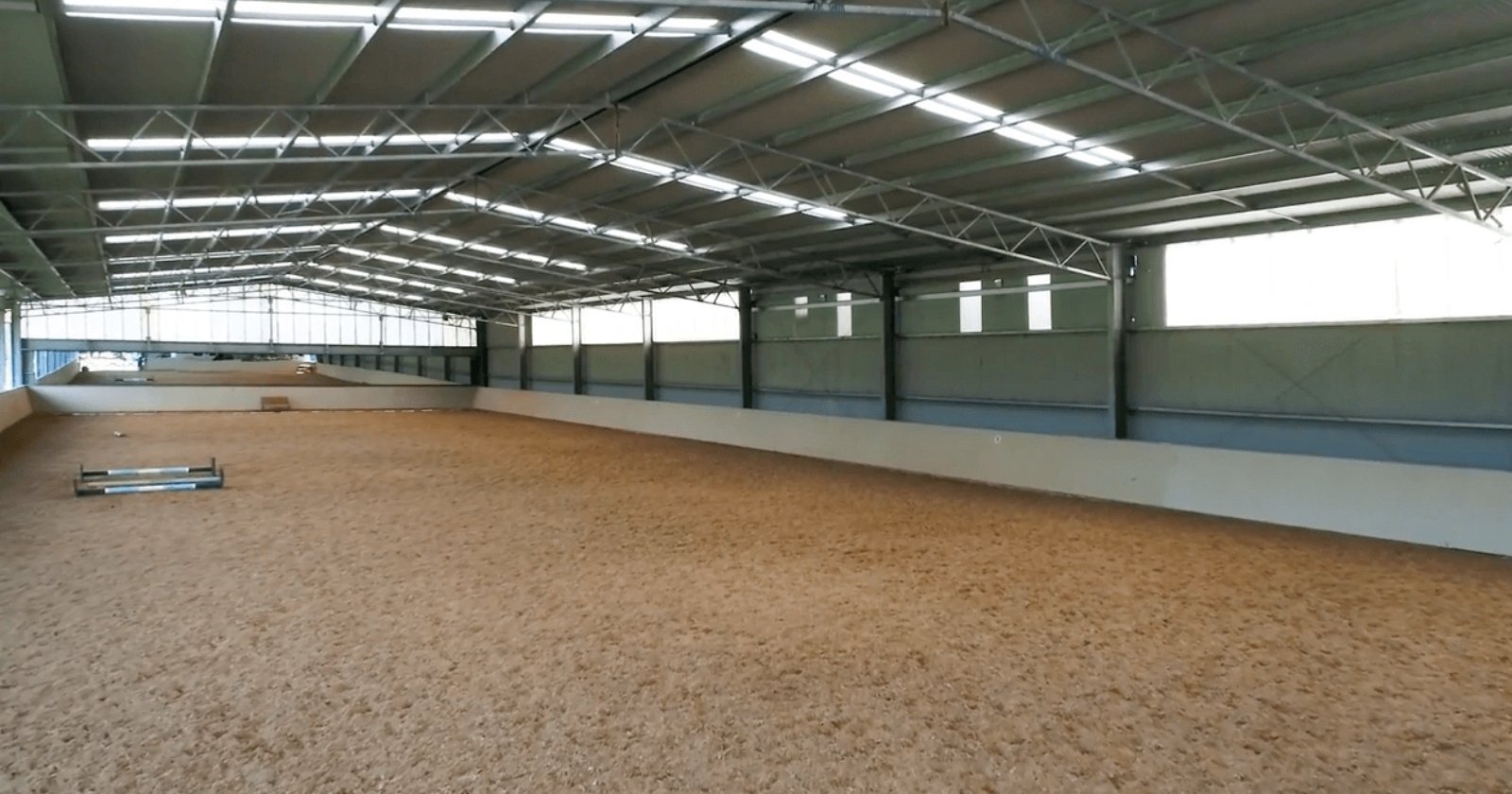
Outdoor competition arenas require at least 4,000 square metres with a 50m minimum width to accommodate varied course designs. Indoor setups can work with 1,200 square metres if the short side measures at least 20m, though tighter spaces limit course options.
Cutting & Campdraft Arena
These disciplines flip the proportions. Most cutting arenas run 42-46m wide by 21-32m long, giving horses lateral space to work cattle without needing the length jumpers or dressage riders require.
General Riding Arena
20m × 40m to 30m × 60m covers most recreational needs. Jumping enthusiasts often prefer the wider end of this range for course layouts, whilst trail riders might be comfortable with something smaller.
Round Yard
15m to 20m diameter works well for lunging, starting young horses, and groundwork. Many properties include both a round yard and a rectangular arena for training versatility.
Thinking about building your own equestrian facility? Our Equestrian Buildings brochure walks you through your options.

Marking Out Your Arena: Proven Construction Methods
Equestrian Australia's construction guide offers a simple string-and-peg technique that delivers accurate right angles without professional surveying equipment.
Place your first corner peg, then measure your long side (40m for a small dressage arena) and place the second peg. Extend this baseline by roughly 3 metres. Using a 10-metre length of twine with loops tied at both ends and one at the exact centre, place the end loops over your pegs. Pull the centre loop tight to the right, then left. These points mark your perpendicular line. Peg them and you've established a perfect right angle.
Repeat this process at the opposite corner to locate your fourth corner. The method sounds fiddly but becomes quick with practice, and it's far cheaper than hiring surveyors for a backyard project.
Alternatively, a homemade wooden set square (easily constructed from 1½-inch timber at a 90-degree angle) speeds up the process if you're marking multiple arenas or regularly adjust your layout. Place the apex at your corner peg, sight one arm along your baseline, and the other arm points exactly where your next corner sits.
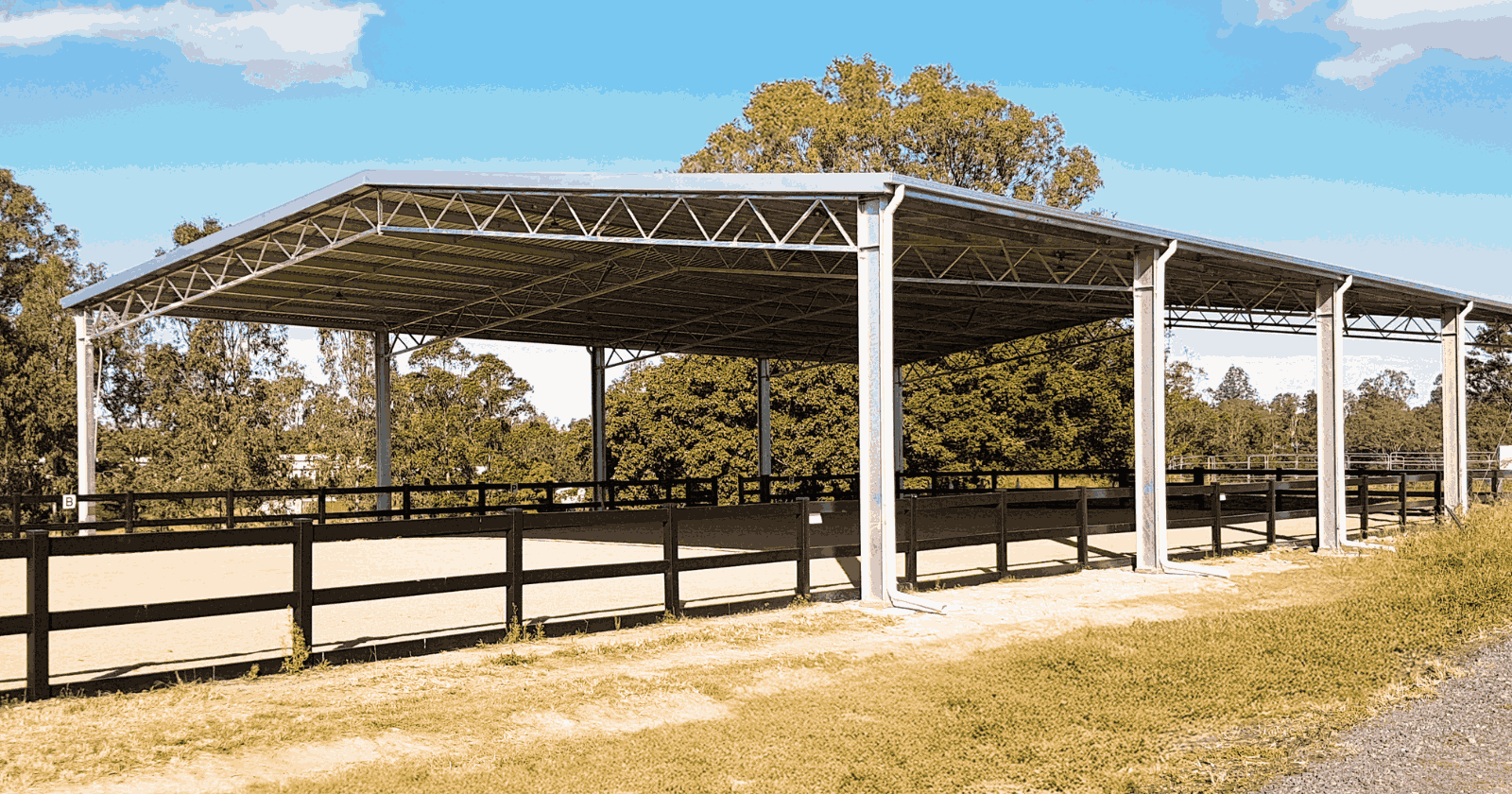
Site Selection Factors That Actually Matter
1. Drainage
Avoid low-lying areas where water pools after rain. Standing water destroys footing and creates weeks-long delays between storms and usable surfaces. A gentle 1-2% slope helps surface water move off without creating uneven footing.
2. Sun orientation
North-facing arenas in Australia cop full sun during summer training sessions, whilst south-facing spaces stay cooler but may hold morning moisture longer. East-west orientation offers a compromise, but check sun angles at your typical riding times.

3. Distance from stables
Around 30-50 metres usually hits the sweet spot. Too close and you're dealing with dust near horse accommodations. Too far and you're wasting time leading horses back and forth multiple times daily.
4. Underground services
Check for water, power, and phone lines before you start digging. Your local council can usually provide service location maps, or Dial Before You Dig offers free location services across Australia.
Arena Lighting for Year-Round Use
Winter evenings arrive early, and summer heat often pushes riding sessions to dawn or dusk. Proper lighting extends your horse riding arena's usability across seasons.
LED floodlights now dominate arena lighting thanks to lower running costs and better light quality. Position lights outside the arena fence at 4-6 metre heights to minimise shadows and glare. Most arenas need four to eight fixtures depending on size, aiming for 200-300 lux across the riding surface.
Designate some budget for a basic four-light LED setup including posts, fixtures, and electrical work. Sophisticated systems with dimming controls and multiple zones cost more but give you flexibility for different activities.
Consider motion sensors or timers to avoid leaving lights running after your ride.
2026 Horse Arena Budget
Building a Horse Arena represents a significant investment, so understanding costs helps with planning. While prices vary depending on size, site preparation, and materials, you can use the following as a guide:
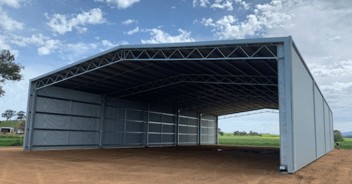
- Roof-only arenas (open sides): Costs start from around AU$150 per square metre, depending on length, span, height, and your location.
- Fully enclosed arenas: Expect costs from AU$250 per square metre.
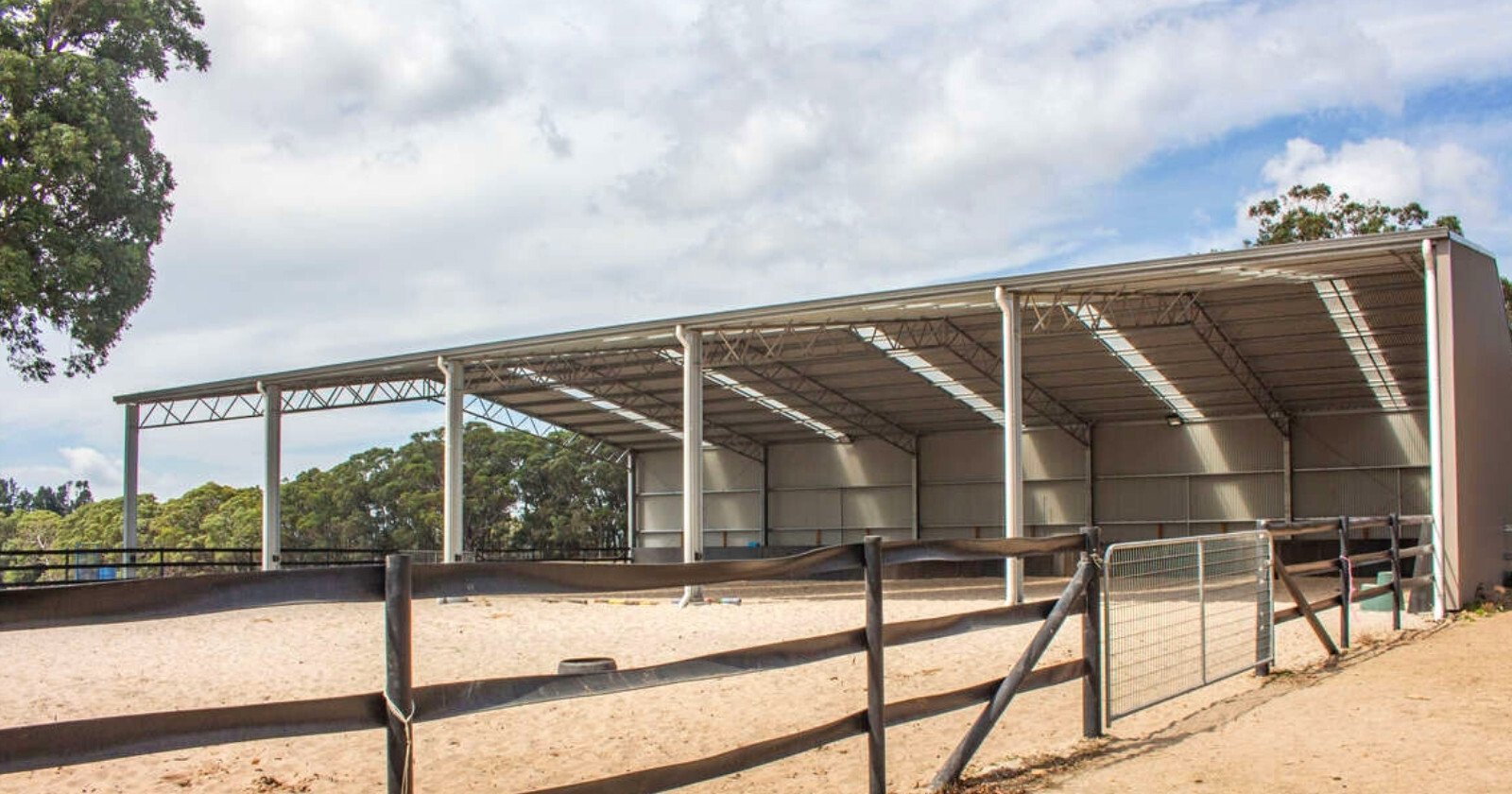
Site preparation, such as clearing and grading the ground, drainage, fencing, and footing, will add to your overall investment. DIY preparation can reduce some expenses if you have the right machinery, but professional grading usually pays for itself through time savings and better results.
Ready to price up your ideal arena? Use our online Shed Builder tool to explore structure options, compare materials, and get an instant quote.
Frequently Asked Questions
.svg)